
 EN
EN
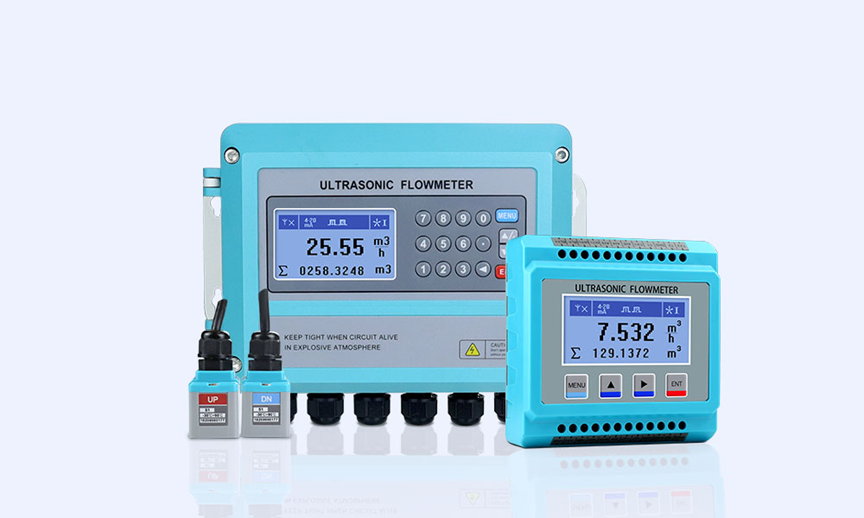
The JUJEA flow meter R&D team recognizes ultrasonic flow meters as a significant advancement in flow measurement technology , utilizing sound waves to measure the fluid flow state in pipelines. With its precise and non-destructive measurement characteristics, it has completely reshaped process control and monitoring models across numerous industries. Whether ensuring production accuracy or optimizing operational efficiency, this technology has become an indispensable core support.
This guide will delve into the core technological logic and diverse industry application scenarios of ultrasonic flow meters, and share key points in practical implementation to help users fully explore their application value.
This guide will explore the technology, applications, and best practices of ultrasonic flow meter systems.
A clear understanding of the working principle of ultrasonic flow meters is key to optimizing equipment performance and quickly troubleshooting problems. Only by understanding its operational logic can the equipment achieve its best performance in real-world scenarios.
- System Composition: A complete ultrasonic flow meter system consists of several key components working together. Sensors transmit and receive ultrasonic signals, while a sophisticated processing unit analyzes time differences or frequency shifts. Temperature sensors provide compensation data, and a digital interface enables data logging and system control. This integration ensures accurate and reliable flow measurement under various operating conditions.
Two core measurement technologies : Different measurement technologies correspond to different application scenarios, and choosing the right technology is essential to maximizing the value of the equipment.
- Time-of-flight measurement: Time-of-flight ultrasonic flow meters utilize two sensors that act as both transmitters and receivers. These devices measure the time difference between ultrasonic pulses propagating in the forward and reverse directions of flow. As fluid flows through a pipe, the signal propagating in the forward direction travels faster than the signal propagating in the reverse direction, resulting in a measurable time difference that is directly related to the flow velocity.
- Doppler effect technology: Doppler ultrasonic flow meters work by emitting continuous ultrasonic waves and measuring the frequency changes of the ultrasonic waves reflected by particles or bubbles in the fluid. This technology is particularly effective for liquids containing suspended solids or bubbles, making it ideal for wastewater and sludge applications.
Types of ultrasonic flow meters
The design differences of ultrasonic flow meters directly affect the installation difficulty and measurement capability. When selecting one, it is necessary to consider the installation conditions and measurement requirements of the actual scenario in order to maximize the cost performance.
- Clamp-on flow meters: These meters employ a non-invasive installation method, requiring no modification to existing pipelines; they are simply clamped to the outside of the pipe for immediate use. This design provides exceptional flexibility, making them particularly suitable for retrofitting legacy systems, temporary measurements, or system audits and verifications. More importantly, external installation completely eliminates the risk of fluid contamination, and subsequent maintenance only requires cleaning the sensor surface, significantly reducing operating costs.
- Online flow meters: directly integrated into the piping system for use as fixed measurement points. Although initial installation requires pipeline modifications, the trade-off is higher measurement accuracy and long-term stability, making them an ideal choice for core scenarios such as production process control. For dedicated locations requiring long-term, continuous monitoring, their superior stability provides continuous and reliable data support for production management.
Main applications in various industries
The versatility of ultrasonic flow meters allows them to find precise application scenarios in different industries, becoming a key tool for improving operational efficiency by adapting to the core needs of various industries.
- Environmental Monitoring: Environmental laboratories utilize ultrasonic flow meters to precisely measure river and groundwater flows and conduct emissions compliance tests. These flow meters provide continuous and accurate data, crucial for environmental protection and regulatory reporting, enabling real-time monitoring of water resources and potential pollution incidents.
- Water and wastewater treatment: After wastewater filtration, ultrasonic flow meters are used for process control and distribution monitoring. These devices ensure accurate chemical dosing, monitor treatment efficiency, and track emissions. Their non-invasive measurement capabilities make them crucial for maintaining system integrity while meeting stringent regulatory requirements.
- Chemical Processing: In chemical processing applications, ultrasonic flow meters excel in batch control and material consumption monitoring. Their non-contact measurement method is particularly important when handling corrosive or hazardous materials, eliminating concerns about sensor performance degradation while maintaining accurate flow control.
- Pharmaceutical Manufacturing: The pharmaceutical industry relies on ultrasonic flow meters for their superior accuracy and aseptic operation. These flow meters support all processes from R&D to production, ensuring precise flow control while maintaining product purity and system cleanliness.
- Food and beverage production: Food and beverage manufacturers benefit from the hygienic design and reliable performance of ultrasonic flow meters. These flow meters use a non-contact measurement method, support process control and in-situ cleaning systems, and meet stringent hygiene standards.
Technological advantages and benefits
The unique design features of ultrasonic flow meters give them several distinct advantages over traditional flow measurement technologies, making them increasingly popular across various industries.
- Non-contact measurement: The non-contact design of ultrasonic flow meters avoids direct contact with the process fluid, thus reducing the risk of contamination and maintenance requirements. This contrasts sharply with electromagnetic flow meters , which require direct contact with the fluid and can only measure conductive liquids. While electromagnetic flow meters excel in applications where conductivity is guaranteed, such as wastewater treatment, the non-contact measurement method of ultrasonic technology is more valuable in hygienic applications, handling corrosive or hazardous materials, and situations requiring the measurement of non-conductive fluids.
- Accuracy and Reliability: Modern ultrasonic flow meters offer extremely high accuracy. Their stable measurement principle and design with no moving parts ensure consistent performance over the long term, making them ideal for process control applications requiring extremely high precision.
- Maintenance: Because ultrasonic flow meters have no moving parts, maintenance requirements are significantly reduced compared to traditional flow measurement devices. This design feature minimizes system downtime, lowers operating costs, and extends service life, resulting in significant long-term value.
- Cost advantages: While the initial investment in ultrasonic flow meter technology may be higher than that of traditional flow meters, its total cost of ownership is generally lower. Reduced maintenance requirements, minimal system downtime, and extended service life all contribute to cost savings over the equipment's lifecycle.
The performance of an ultrasonic flow meter depends not only on the device itself, but also on installation specifications and environmental compatibility. Proper installation and setup are prerequisites for ensuring optimal performance.
- The core requirement for installation location : Choosing a suitable installation location is fundamental to ensuring measurement accuracy. The key is to ensure sufficient straight pipe sections upstream and downstream of the flow meter to allow the fluid to flow in a stable state, avoiding the impact of flow turbulence on measurement results. Simultaneously, it is necessary to check the pipe condition and material compatibility beforehand to improve system reliability from the installation stage.
- Environmental factors adaptation management : Environmental factors such as temperature fluctuations, mechanical vibrations, and electromagnetic interference can all affect measurement accuracy. During the installation planning phase, it is necessary to assess the site environment in advance and take targeted protective measures, such as adding heat insulation layers, vibration damping devices, and electromagnetic shielding, to ensure that the equipment can still output accurate data stably in complex environments.
Although ultrasonic flow meters are highly reliable, proper maintenance and calibration can further extend their service life, ensure long-term measurement accuracy, and avoid operational risks caused by equipment deviations.
- Routine Maintenance: Simple and Efficient Maintenance Tips : The key is to keep the sensor surface clean and the electrical connections stable. Regularly wipe the sensor probe, check for loose cable connections, and ensure that the mounting hardware is secure. These simple operations can effectively maintain measurement accuracy and equipment stability, without the need for complex professional maintenance.
- Calibration Procedures: Dual Requirements of Compliance and Accuracy : Although the equipment is highly stable, regular calibration remains crucial for ensuring data accuracy. Establishing a comprehensive calibration process, conducting regular performance tests, and meticulously recording calibration data and adjustments not only ensures measurement accuracy but also meets industry regulatory and compliance requirements, providing strong support for operational audits.
Integration capability: A core feature for adapting to intelligent systems
Modern ultrasonic flow meters feature advanced data management and connectivity capabilities, enhancing their applicability in automated systems and complex processes.
- Data Management: Modern ultrasonic flow meters offer a variety of data management functions, including real-time data and cumulative data. These functions help optimize processes, ensure regulatory compliance, and provide a basis for decision-making.
- System connectivity: Advanced connectivity options allow for integration with existing control systems. Standard communication protocols support wired and wireless connections, while remote monitoring enables efficient system oversight and rapid response to operational changes.
Compliance with industry standards and proper documentation are important aspects of ultrasonic flow meter implementation, especially in regulated industries.
- Standards and Certifications: Ultrasonic flow meters meet multiple industry standards and certification requirements, including ISO compliance and NIST traceability. These certifications ensure measurement accuracy and reliability and support regulatory compliance in various application areas.
- Documentation Requirements: Well-documented records contribute to regulatory compliance. Detailed calibration, maintenance, and performance verification records demonstrate continued compliance with applicable standards and regulations.
Choosing the right ultrasonic flow meter requires careful consideration of a number of factors to ensure optimal performance in a specific application.
- Application Evaluation: Selecting the right ultrasonic flow meter requires careful evaluation of application requirements. Flow characteristics, accuracy requirements, and environmental conditions all influence the choice of flow meter to ensure optimal performance in a specific application.
- Installation limitations: Physical installation limitations often influence the selection of flow meters. When choosing different ultrasonic flow meters, the available straight pipe length, installation requirements, and power supply availability must be considered.
Ultrasonic flow meters, with their high accuracy, reliability, and efficiency, continue to drive the development of flow measurement technology. Their non-invasive operation and extremely low maintenance requirements make them an ideal choice for various applications across numerous industries. With technological advancements, these devices are expected to play an increasingly important role in process control and automation strategies.
JUJEA Water Flow Meter Manufacturer
In today's increasingly challenging water resource management environment, choosing a reputable manufacturer is crucial to obtaining solutions that combine technological advancement with application-specific suitability. JUJEA, a leader in the liquid flow meter field with decades of experience, provides reliable support to various industries through innovation and quality.
JUJEA is committed to the research and development and production of robust, durable, accurate, and reliable flow measurement equipment and supporting systems. From flow meters to water quality analysis instruments, automatic samplers, and intelligent water data management systems, it has formed a product matrix covering all scenarios in the water industry. Whether it's water supply, sewage treatment, rainwater management, or industrial wastewater treatment, it can provide customized solutions.
Headquartered in Wuhu, Anhui, China, JUJEA's business has expanded to multiple countries and regions worldwide, including the United States and the United Kingdom, thanks to its outstanding product quality and service reputation. We are committed to "improving the environment and safeguarding the quality of life," helping our clients achieve more efficient water resource management.
For professional solutions tailored to your application scenarios, please feel free to contact JUJEA's technical experts directly.
What are the differences between ultrasonic time-of-flight flow meters and Doppler flow meters?
Time-of-flight ultrasonic flow meters use two sensors to measure the time difference between ultrasonic pulses propagating in the forward and reverse directions, making them suitable for clean liquids. Doppler ultrasonic flow meters, on the other hand, measure the frequency changes caused by particles in the fluid, making them more suitable for liquids containing suspended solids or air bubbles.
How do ultrasonic flow meters differ from traditional flow sensors?
Unlike traditional flow sensors that require direct contact with the fluid, ultrasonic flow meters offer non-invasive measurement capabilities. This design eliminates wear, reduces maintenance needs, and avoids the risk of contamination. While the initial investment may be higher than that of traditional flow sensors, the long-term benefits typically outweigh the cost.
Does an ultrasonic flow meter require a contact level sensor?
No, ultrasonic flow meters operate independently of contact level sensors. Contact level sensors require direct contact with the fluid, while ultrasonic technology can measure flow without direct contact with the process fluid, giving it an advantage in sanitary applications and corrosive media.