
 EN
EN
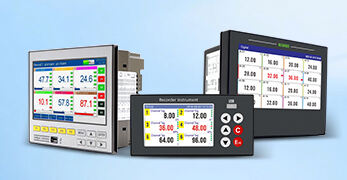
Electromagnetic flow meters, also known as electromagnetic flow meters, are indispensable tools in various industrial applications. JUJEA Products' flow meters are renowned for their durability and high performance, representing a model of excellence among Chinese flow meter manufacturers. These flow meters feature a robust and durable design, including impact-resistant panels and moisture-proof sealed circuitry. Furthermore, their high accuracy, reliability, and resistance to chemical corrosion make them ideal for harsh environments.
In this blog post, we will explore ten industrial applications of electromagnetic flow meters and explain why they are perfectly suited for these applications. Furthermore, we will delve into the features, advantages, and technical details of JUJEA's GTEF electromagnetic flow meter.
introduce
Electromagnetic flow meters, also known as electromagnetic flow meters, are flow measurement devices that use the principle of electromagnetic induction to measure the flow rate of conductive fluids. These versatile instruments are widely used in industries such as water treatment, wastewater treatment, chemical engineering, oil and gas, and food and beverage. Electromagnetic flow meters are renowned for their high accuracy, high reliability, and resistance to chemical corrosion, making them an ideal choice for harsh environments.
This article will introduce the basic principles, working characteristics, advanced functions, and advantages of electromagnetic flowmeters.
What is an electromagnetic flowmeter?
An electromagnetic flow meter is a precision device that uses a magnetic field to measure the flow rate of conductive fluids. It consists of main components: a valve body, a converter, a liner, and a sensor. The sensor is installed inside the pipe to detect the induced voltage generated when fluid flows through the magnetic field. The converter then converts this voltage into a readable flow measurement and transmits the data to the control system. This seamless integration makes it possible to accurately monitor and control fluid flow in a variety of industrial processes.
Working principle and main components
Magnetic circuit system: Its function is to generate a uniform DC or AC magnetic field. DC magnetic circuits use permanent magnets, which have the advantages of simple structure and less susceptibility to AC magnetic field interference. However, they easily polarize the electrolyte liquid passing through the measuring conduit, causing the positive electrode to be surrounded by negative ions and the negative electrode by positive ions—a phenomenon known as electrode polarization. This leads to increased internal resistance between the two electrodes, severely affecting the normal operation of the instrument. When the pipe diameter is large, the permanent magnet is correspondingly large, bulky, and uneconomical. Therefore, electromagnetic flowmeters generally use alternating magnetic fields, generated by a 50Hz power frequency.
Measuring conduit: Its function is to allow the conductive liquid being measured to pass through. In order to ensure that the magnetic flux is shunted or short-circuited when the magnetic lines of force pass through the measuring conduit, the measuring conduit must be made of a non-magnetic material with low electrical conductivity, low thermal conductivity, and a certain mechanical strength. Non-magnetic materials such as stainless steel, fiberglass, high-strength plastics, and aluminum can be selected.
Electrode: Its function is to extract an induced electromotive force signal proportional to the measured quantity. Electrodes are generally made of non-magnetic stainless steel and are required to be flush with the lining to ensure unobstructed fluid flow. They should ideally be installed vertically to the pipe to prevent sediment buildup that could affect measurement accuracy.
Housing: Made of ferromagnetic material, it serves as the outer cover for the excitation coil of the distribution system and isolates it from interference from external magnetic fields.
Lining: A complete electrically insulating lining is installed on the inner side of the measuring conduit and the flange sealing surface. It directly contacts the liquid being measured and its function is to increase the corrosion resistance of the measuring conduit and prevent the induced potential from being short-circuited by the metal measuring conduit wall. Lining materials are mostly corrosion-resistant, high-temperature-resistant, and wear-resistant polytetrafluoroethylene (PTFE) plastics, ceramics, etc.
Converter: The induced electromotive force signal generated by liquid flow is very weak and greatly affected by various interference factors. The function of the converter is to amplify the induced electromotive force signal and convert it into a unified standard signal while suppressing the main interference signals. Its task is to amplify and convert the induced electromotive force signal Ex detected by the electrodes into a unified standard DC signal.
Measurement principle
The measurement principle is based on Faraday's law of electromagnetic induction . That is, when a conductive liquid flows through an electromagnetic flowmeter, a voltage proportional to the average flow velocity V (volume flow rate) is generated in the liquid. This induced voltage signal is detected by two electrodes in contact with the liquid, transmitted through a cable to an amplifier, and then converted into a unified output signal. Based on the measurement principle of the electromagnetic flowmeter, the flowing liquid is required to have a minimum conductivity.
advantage
① The transmitter structure of the electromagnetic flowmeter is simple, with no moving parts or throttling components that obstruct fluid flow. Therefore, it does not cause any additional pressure loss when fluid passes through, nor does it cause problems such as wear or blockage. It is particularly suitable for measuring liquid-solid two-phase fluids such as slurry and sewage containing solid particles, as well as various highly viscous slurries. Similarly, because it has no moving parts, it can achieve excellent corrosion resistance by attaching a corrosion-resistant insulating lining and selecting corrosion-resistant materials for the electrodes, making it suitable for measuring various corrosive media.
② An electromagnetic flowmeter is a volumetric flow measurement instrument. During the measurement process, it is unaffected by the temperature, viscosity, density, and conductivity (within a certain range) of the measured medium. Therefore, after calibration with water, an electromagnetic flowmeter can be used to measure the flow rate of other conductive liquids without additional corrections.
③ Electromagnetic flowmeters have no mechanical inertia, are highly sensitive, can measure instantaneous pulsating flow, and have good linearity. Therefore, the measured signal can be directly and linearly converted into a standard signal output using a converter, which can be used for local indication or long-distance transmission.
shortcoming
While electromagnetic flowmeters possess the aforementioned excellent characteristics, they also have some shortcomings that limit their application. These mainly include the following:
① Electromagnetic flowmeters cannot be used to measure gases, vapors, or liquids containing large amounts of gas.
② Electromagnetic flowmeters cannot currently be used to measure liquid media with very low conductivity. The conductivity of the liquid medium being measured cannot be lower than 20 μS/cm, and they are ineffective for petroleum products or organic solvents.
③ Due to the temperature limitation of the insulating lining material of the measuring tube, industrial electromagnetic flowmeters cannot currently measure high-temperature and high-pressure fluids.
④ Electromagnetic flow meters are affected by flow velocity distribution. Under axisymmetric distribution conditions, the flow signal is proportional to the average flow velocity. Therefore, there must be a certain length of straight pipe sections before and after the electromagnetic flow meter.
⑤ Electromagnetic flowmeters are susceptible to external electromagnetic interference.
1. Water and wastewater treatment
Electromagnetic flow meters are widely used in water treatment plants and wastewater treatment plants because they can effectively handle conductive liquids containing contaminants. Furthermore, the absence of moving parts in electromagnetic flow meters ensures long-term reliability and extremely low maintenance requirements, even in harsh environments.
2. Chemical processing
In chemical processing, the ability to accurately measure corrosive and abrasive fluids is crucial. Operating below maximum operating temperature in high-temperature environments is essential for improving equipment durability and performance. Therefore, electromagnetic flowmeters such as GTEF feature chemically resistant linings that withstand the erosion of corrosive substances, ensuring measurement accuracy and safety.
3. Food and Beverage Industry
Hygiene is paramount in food and beverage processing. The pair of electrodes in an electromagnetic flowmeter ensures accurate flow measurement, providing a hygienic and non-invasive solution for measuring liquid composition. Furthermore, they are ideal for maintaining product quality accuracy and consistency without contaminating the processing.
4. Pulp and Paper Industry
The pulp and paper industry requires precise measurement of pulp flow rates. This is undoubtedly challenging due to the high solids content in pulp. However, electromagnetic flow meters excel under these conditions, providing reliable performance without clogging or wear. Therefore, they ensure production stability and quality control.
5. Mining and mineral processing
Mining operations often encounter highly abrasive slurry flows, which can rapidly wear down other types of flow meters. However, electromagnetic flow meters are durable, reliable, and can withstand the harsh conditions of mineral processing, thus ensuring long-term, accurate measurements.
6. Pharmaceutical industry
In pharmaceutical manufacturing, precision and cleanliness are paramount. In fact, electromagnetic flowmeters can perform high-precision measurements of conductive liquids used in drug formulations and production, ensuring process integrity while meeting stringent regulatory requirements.
7. Power generation
In power plants, electromagnetic flow meters are used to monitor the flow rates of cooling water, feedwater, and other critical fluids. Therefore, their high accuracy and wear resistance make them an ideal choice for maintaining the efficient and safe operation of power generation facilities.
8. Oil and Gas Industry
The oil and gas industry relies on precise flow measurement to control the addition of drilling fluids, water injection, and chemicals. Electromagnetic flow meters are typically the preferred choice because they can measure conductive liquids under high pressure and high temperature, providing reliable data even in harsh conditions.
9. Textile manufacturing
In textile production, electromagnetic flowmeters are used to measure the content of dyes, chemicals, and water used in the production process. Furthermore, they can handle a variety of conductive liquids, ensuring precise control over dyeing and finishing processes and thus guaranteeing product quality stability.
10. Semiconductor manufacturing
The semiconductor industry requires ultrapure water and precise chemical metering. Electromagnetic flow meters are essential for the high-precision measurement of these critical fluids, ensuring the quality and consistency of semiconductor products.
JUJEA's GTEF electromagnetic flowmeter
GTEF Product Page
JUJEA's GTEF series of electromagnetic flow meters delivers reliable performance even in the most demanding applications. These flow meters utilize a microprocessor-based flow transmitter and are designed for high performance, ease of installation, and extremely low maintenance requirements. With exceptional accuracy down to ±0.5% of flow rate, the GTEF is ideal for applications requiring precise flow measurement. Proven by over 50,000 customer cases, the GTEF series demonstrates its features, benefits, reliability, and user-friendly interface.
GTEF employs an all-welded construction, forming a seal that effectively protects internal components from moisture and contaminants. This robust and durable design ensures the sensor maintains maximum reliability even in harsh environments, making it a cost-effective solution for various industries.
The GTEF series consists of a sensor and a converter. A magnetically excited coil is installed inside the measuring tube, generating a magnetic field within the tube. As liquid flows through, electrodes on the inner wall of the tube detect the induced electromotive force, and the converter processes this signal to provide accurate flow measurement results.
The sensor's insulating liner is highly durable and non-magnetic, ensuring compatibility with a wide range of corrosive, abrasive, and high-temperature fluids. This versatility makes GTEF ideal for industries requiring durable and accurate flow measurement solutions.
in conclusion
Electromagnetic flow meters, such as JUJEA's GTEF series, are indispensable in numerous industrial applications. Furthermore, their high accuracy, chemical resistance, and reliability make them the preferred choice for measuring conductive liquids in harsh environments. Whether in water treatment, chemical processing, or other applications mentioned above, electromagnetic flow meters provide the performance and durability required for efficient and safe operation. JUJEA Products are renowned for their durable and high-performance industrial equipment, such as the JUJEA GTEF flow meter, which features robust design characteristics such as shock-resistant panels and moisture-proof sealed circuitry, making it a reliable choice for industrial applications.
For industries seeking reliable flow measurement solutions, JUJEA's GTEF series of flow meters offers a rugged, cost-effective option that can withstand the harshness of industrial use while delivering accurate and consistent measurement results.