
 EN
EN
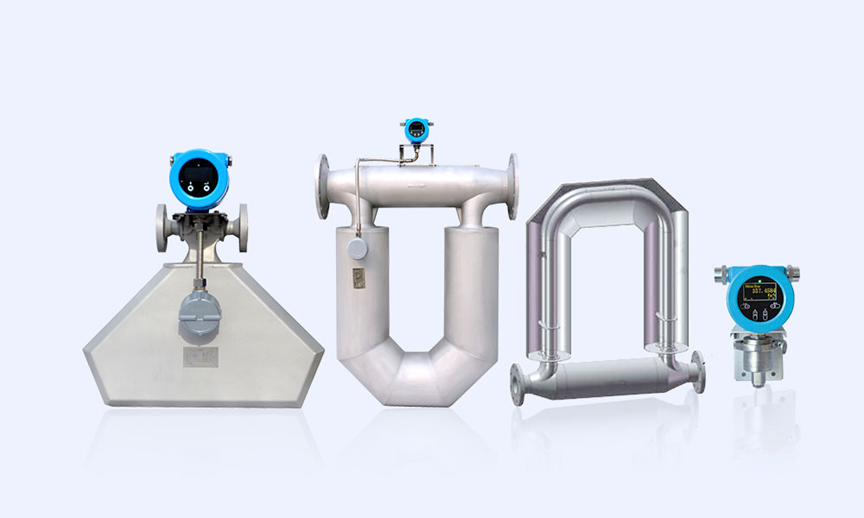
As core equipment in industrial production, energy metering, and environmental monitoring, the scientific selection of gas flow meters directly determines the accuracy of measurement data, the stability of equipment operation, and the economics of subsequent maintenance. JUJEA, the manufacturer, frequently encounters enterprise clients who, due to improper selection in the past, often face problems such as measurement deviations, frequent equipment failures, and soaring maintenance costs, leading them to repurchase a professional flow meter system from JUJEA.
This article will provide you with a systematic selection logic for gas flow meters, starting from application requirements and combining key dimensions such as gas characteristics and installation environment.
1. Define the flow meter project requirements and summarize the requirements before selection.
The first step in product selection is not to directly screen products, but to clarify your own core needs to avoid choosing the wrong product or one that is not suitable, which would delay the progress of the overall project.
Gas flow meter manufacturers recommend the following: Before selecting a model, first clarify the measurement purpose: Is it for trade settlement, process control, or energy monitoring? Trade settlement requires extremely high accuracy and must comply with US metrological verification regulations; process control focuses more on real-time response speed; energy monitoring needs to balance accuracy and data continuity. Secondly, determine the specific scenario of the measured object, such as natural gas pipeline, chemical reactor exhaust, or laboratory trace gas analysis. The core requirements differ significantly between different scenarios. Finally, review the project's basic parameters, including pipe diameter, operating pressure, and medium temperature. These data form the basis for subsequent model selection.
2. Understanding gas characteristics is a key basis for adapting flow meters.
The physicochemical properties of a gas directly affect the compatibility of the flow meter; neglecting this aspect can easily lead to equipment damage or metering failure. First, pay attention to the corrosiveness of the gas. For corrosive gases such as hydrogen sulfide and chlorine, flow meters made of corrosion-resistant materials such as 316L stainless steel or Hastelloy should be selected, as ordinary carbon steel will corrode rapidly. For gases containing dust or liquid, such as boiler flue gas and biogas, models with anti-clogging structures should be chosen.
The compressibility of gases cannot be ignored. When the working pressure fluctuates significantly, a flow meter with pressure compensation function should be selected, such as a differential pressure flow meter paired with a pressure transmitter, to ensure measurement accuracy under different pressures. Furthermore, for flammable and explosive gases (such as methane and propane), the flow meter must have explosion-proof certification, and the explosion-proof level must meet on-site safety requirements. The physicochemical properties of gases directly affect the adaptability of the flow meter; neglecting this dimension can easily lead to equipment damage or measurement failure. The main types of gas characteristics include corrosivity, impurities, compressibility, flammability and explosiveness, and viscosity: Corrosivity, such as hydrogen sulfide and chlorine, directly corrodes the flow meter material; impurities refer to whether the gas contains dust or liquid, such as dust in boiler flue gas and liquid in biogas; compressibility is an inherent property of gases, with significant volume changes when pressure fluctuates; flammability and explosiveness, such as methane and propane, relate to safety protection levels; viscosity affects the measurement accuracy of low-speed gases. Precise adaptation is required for different characteristics: 316L stainless steel or Hastelloy materials should be selected for corrosive gases.
3. Balancing Flow Range and Accuracy
Flow range and accuracy are the core technical parameters for flow meter selection, and a precise match between the two is necessary. The flow range should cover the maximum and minimum flow rates under actual operating conditions. It is generally recommended that the commonly used flow rate of the flow meter be between 30% and 80% of its range to avoid increased measurement errors due to insufficient flow or damage caused by excessive flow exceeding the equipment's capacity.
For example, the gas flow rate of a chemical plant fluctuates between 5-50 m³/h. If a flow meter with a range of 5-50 m³/h is selected, the commonly used flow rate falls within the optimal range. The flow range is a core parameter for selection, and its determination is influenced by multiple factors:
(1) The flow fluctuation under actual working conditions needs to cover the maximum, minimum instantaneous flow and average flow to avoid the measurement distortion of small flow due to excessive range, or the overload damage caused by excessive range;
(2) Gas pressure and temperature: as pressure increases, gas density increases, and mass flow rate changes for the same volume flow rate. It is necessary to convert the data based on the operating parameters.
(3) Pipe diameter. The pipe diameter determines the fluid velocity. If the velocity is too high, the equipment will be easily worn. If it is too low, laminar flow will occur, affecting the metering accuracy.
The accuracy class should be selected based on the measurement purpose. Trade settlement typically requires flow meters with an accuracy class of 0.5 or higher, while process control can use classes of 1.0-2.5. Repeatability should also be considered; flow meters with better repeatability than accuracy are more stable in long-term operation, especially suitable for continuous production scenarios. It is important to note that higher accuracy is not always better; higher accuracy means higher cost, and a balance between cost and performance must be struck based on actual needs.
IV. Gas Flow Meter Installation and Maintenance: Key to Ensuring Long-Term Stable Operation
Installation conditions directly affect the measurement accuracy of flow meters, and factors such as on-site installation space and pipeline routing must be fully considered when selecting a model.
For example, vortex flow meters require a certain length of straight pipe sections before and after them (usually 10D upstream and 5 times the pipe diameter downstream). If the straight pipe section is insufficient on site, a model with a built-in rectifier should be selected or the installation position adjusted. In scenarios with limited space, insertion flow meters are more advantageous than in-line flow meters because their installation does not require cutting off the entire pipe section, making construction more convenient.
Maintenance costs are a crucial consideration for long-term operation, and the maintenance requirements vary significantly depending on the type of flow meter. Differential pressure flow meters, with their orifice plates, nozzles, and other throttling elements prone to wear, require regular replacement. Flow meters with no moving mechanical parts have extremely low maintenance costs and are suitable for remote areas or scenarios where frequent maintenance is inconvenient. Furthermore, it is essential to confirm whether the manufacturer provides comprehensive after-sales service, such as calibration support and troubleshooting, to avoid future maintenance difficulties.
4. Environment and Function: Adapting to Scenarios and Intelligent Needs
Environmental conditions are crucial to the lifespan of flow meters. In high-temperature environments (such as the metallurgical industry), flow meters made of high-temperature resistant materials must be selected to ensure normal operation at temperatures above 150°C. In low-temperature environments (such as the liquefied natural gas sector) , the freeze-thaw resistance of the equipment must be considered to prevent component cracking. For humid and dusty environments, the flow meter's protection rating must reach IP65 or higher to prevent moisture and dust from entering the internal circuitry.
With the development of industrial intelligence, communication and data output functions are becoming increasingly important. When selecting a flow meter, it is necessary to confirm whether it supports common communication methods such as 4-20mA analog signals and RS485.
5. Calibration, Certification, and Cost: Balancing Compliance and Economy
Flow meters must be calibrated and certified by a US statutory metrology agency to ensure the legal validity of measurement data. This is especially important for equipment used in trade settlements, which must be calibrated regularly and certified. Additionally, attention should be paid to industry-specific certifications to ensure the equipment complies with industry standards.
Cost considerations must balance initial purchase costs and long-term operating costs. Initial purchase costs are higher, but maintenance costs are lower and the lifespan is longer; differential pressure flow meters have lower initial purchase costs, but later costs for replacing throttling elements and calibration are higher. A full life-cycle cost calculation is necessary when selecting a model to avoid focusing solely on initial investment while ignoring long-term losses.
6. Manufacturer's Considerations: The Core Guarantee of Quality and Service
A manufacturer's manufacturing capabilities directly determine the quality of a flow meter. It's crucial to consider the manufacturer's production qualifications, such as ISO9001 quality management system certification; the precision of core component processing, such as whether sensors and chips are independently developed or sourced from well-known brands; and the sophistication of their production equipment, including the availability of CNC machining centers and precision testing instruments. Furthermore, the manufacturer's industry experience is critical. Manufacturers specializing in specific sectors (such as natural gas and chemicals) have a better understanding of the specific operating conditions required for different scenarios, resulting in more adaptable products. In addition, comprehensive pre-sales technical support (such as operating condition analysis and customized solutions) and after-sales guarantees are also important considerations when selecting a flow meter.
In summary, selecting a gas flow meter is a systematic project that requires comprehensive consideration from multiple dimensions, including demand positioning, medium characteristics, technical parameters, installation and maintenance, environmental adaptability, compliance costs, and manufacturer capabilities. It is recommended to fully communicate with the manufacturer regarding operating details before selection, and, if necessary, invite professional technicians to conduct an on-site survey to ensure that the selected flow meter not only meets current needs but also adapts to future expansion of operating conditions, achieving the dual goals of accurate metering and economical operation.